
mydentalflorida@gmail.com
Mon-Fri 8AM-6PM
Weekends by Appointment

One of the biggest misconceptions is that any discomfort after surgery means dry socket.
It does not.
Normal healing often involves soreness, swelling, and tenderness during the first week.
Dry socket typically produces:
Severe throbbing pain
Pain that suddenly worsens after initial improvement
Pain radiating to the ear
Pain radiating to the temple
Pain radiating down the jaw
Difficulty sleeping due to pain
Foul taste in the mouth
Bad breath
Many patients describe dry socket pain as: “The pain medication barely touches it.”
This is very different from normal post-operative soreness.
Dry socket most commonly develops between:
This is the highest-risk period.
Patients frequently report:
Feeling fine immediately after surgery
Improving during the first day or two
Suddenly developing severe pain several days later
Because dry socket typically appears after the initial healing period has begun, the sudden increase in pain often catches patients by surprise.
Wondering what’s normal each day after surgery? Read our complete Wisdom Teeth Recovery Day by Day guide.
Many patients worry about dry socket because the extraction site can look unusual while it heals. A healing socket may look dark, red, white, yellow, or hollow at different stages. Appearance alone is not enough to diagnose dry socket.
The most important clue is usually pain.
Normal healing usually improves gradually. Dry socket usually causes severe pain that begins or worsens several days after extraction, often radiating to the ear, jaw, or temple. Dry socket occurs when the protective blood clot is lost too early, exposing bone and sensitive nerve endings.
White or yellow material inside the extraction socket is not automatically infection or dry socket.
In many cases, the white material is fibrin or granulation tissue. This is part of normal wound healing. Granulation tissue helps fill the socket, supports new blood vessel formation, and protects the area while gum tissue and bone continue to recover.
This can look alarming because patients expect the socket to stay dark red. In reality, the socket often changes from a dark blood clot to lighter-colored healing tissue during the first week.
White tissue is more likely to be normal healing when:
Pain is improving
Swelling is decreasing
There is no fever
There is no strong foul odor
The area is not getting worse each day
White material is more concerning when it is associated with severe worsening pain, pus-like drainage, fever, increasing swelling, or a strong bad taste.
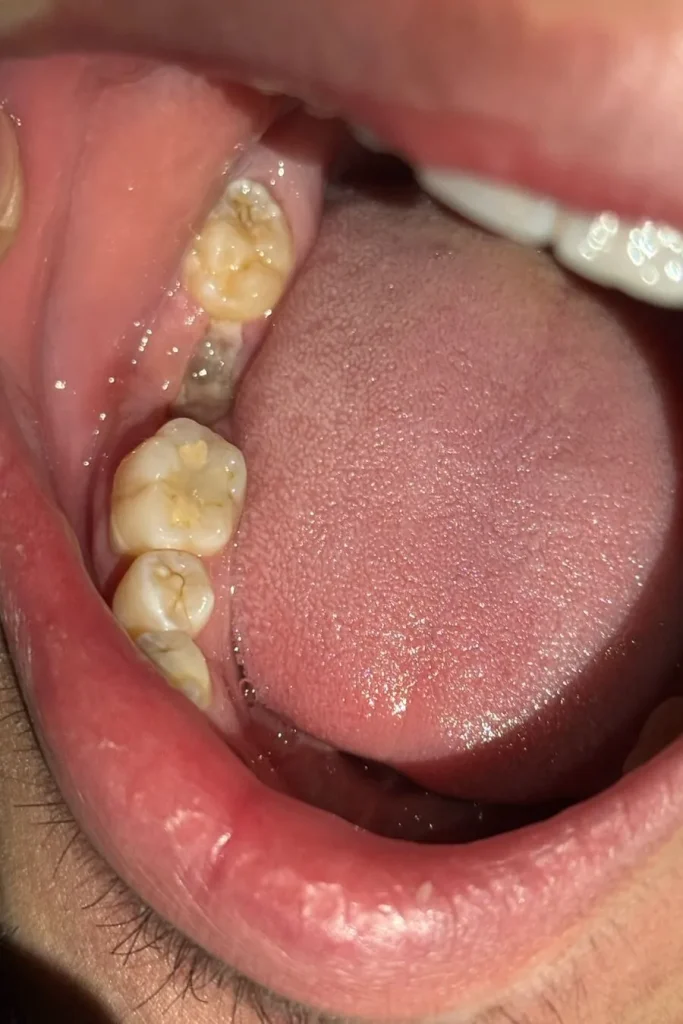
A deep hole after wisdom tooth removal is very common and does not automatically mean dry socket.
The extraction socket is the space where the tooth and roots used to be. After surgery, the gum tissue begins closing over the area, but the bone underneath takes much longer to fill in. This is why the hole may still look deep even when healing is progressing normally.
Bone healing is slower than gum healing. The gum may look mostly healed within weeks, while the bone continues remodeling for several months.
A deep socket is usually normal when:
Pain is mild or improving
There is no worsening swelling
There is no fever
There is no foul odor
The site is gradually becoming less tender
A deep hole is more concerning if it is accompanied by severe pain, visible exposed bone, bad taste, or pain that suddenly worsens around days 2–5.
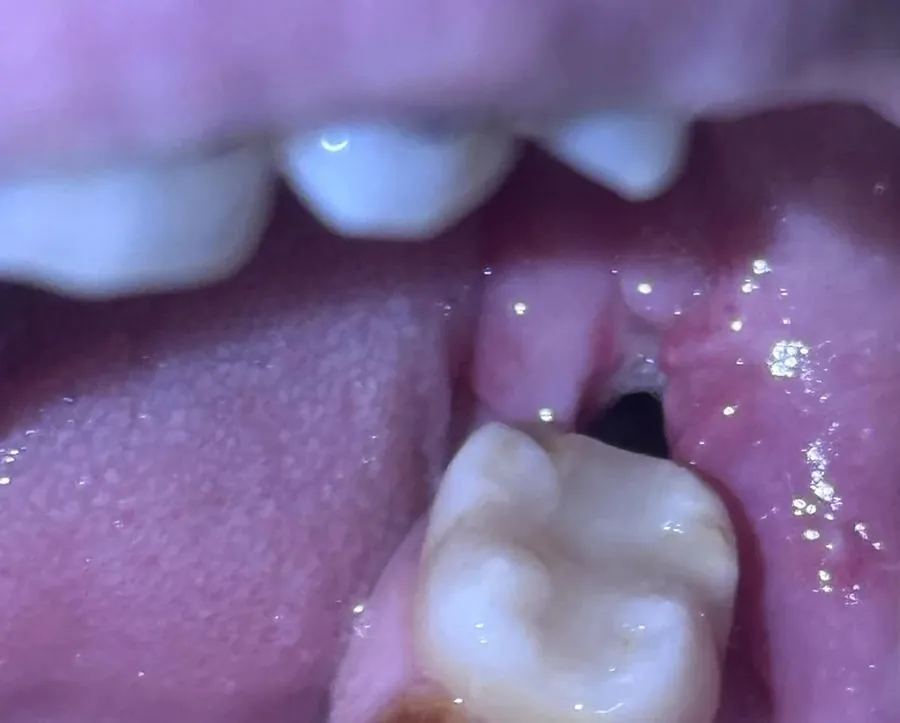
Food getting trapped in the wisdom tooth socket is one of the most common recovery concerns.
During the second week, the socket may still be open enough for soft foods, rice, pasta, bread, or small particles to collect. This can feel uncomfortable and may look concerning, but food trapping is not the same thing as dry socket.
Food debris is usually:
Loose
Removable with gentle rinsing or irrigation
Not attached to the socket wall
Not associated with severe radiating pain
Healing tissue is usually:
Attached to the socket
Does not rinse away
May look white, cream, or yellow
Often appears during normal healing
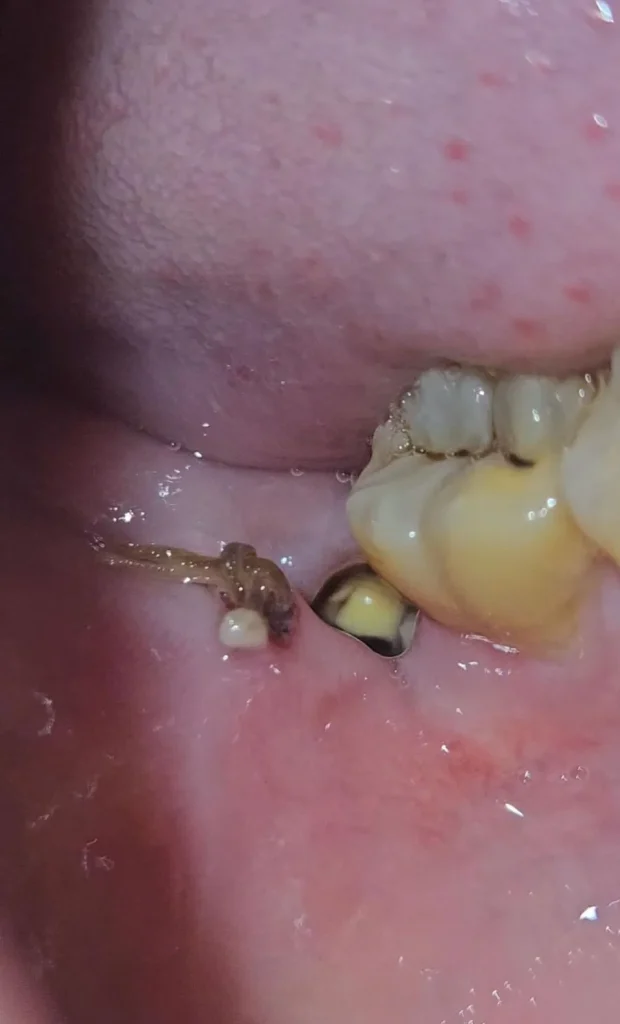
Patients should not dig into the socket with toothpicks, tweezers, fingernails, or sharp objects. If your surgeon gave you a syringe, use it only as instructed and usually not during the first 24 hours. Gentle saltwater rinses after meals can help keep the area clean.
If food is trapped and cannot be removed, or if pain, swelling, or odor worsens, schedule a follow-up with your dentist or oral surgeon.
A small sharp white piece appearing from the gum after extraction may be a bone fragment, also called a bone sequestrum.
This is different from dry socket.
A bone sequestrum is a small piece of bone that may work its way out as the extraction site remodels. Patients often mistake it for food, a piece of tooth, infection, or exposed bone.
A bone fragment may feel:
Sharp
Hard
Fixed in place
Irritating to the tongue or cheek
Small bone fragments are often harmless and may come out on their own. If the area is painful, rubbing, or not improving, your dentist can usually remove the fragment during a quick follow-up visit.
Dry socket, by contrast, is usually defined by severe pain from loss of the protective clot and exposed bone inside the socket.
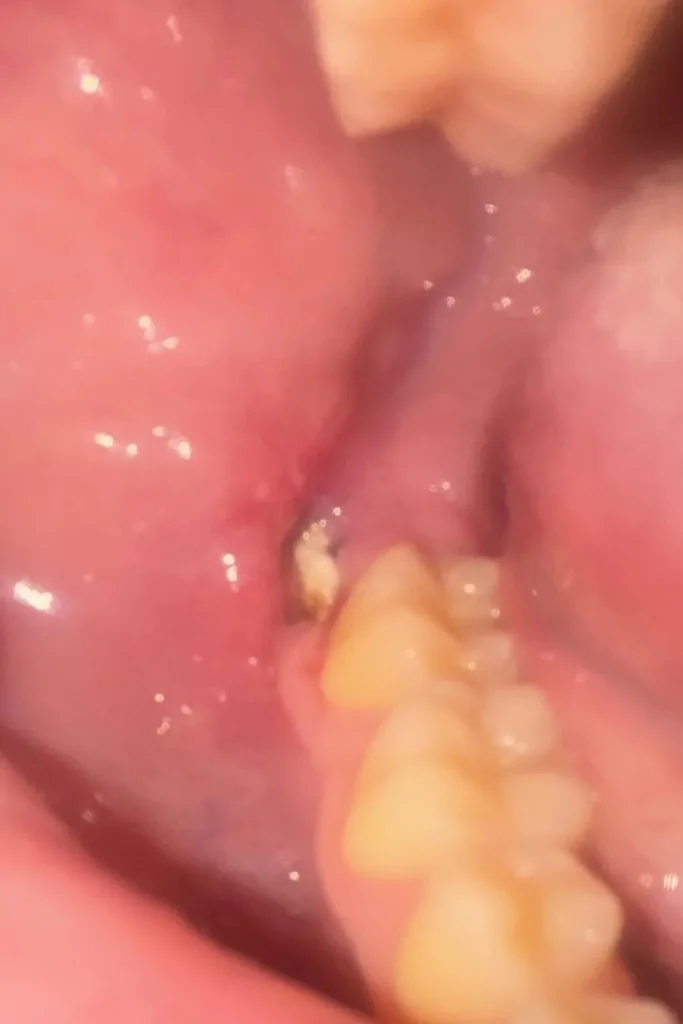
These fragments may appear as the socket remodels and are different from dry socket.
More likely normal healing:
Mild to moderate soreness
Pain improving over time
White or yellow healing tissue
Deep-looking socket
Food occasionally getting trapped
Mild bad taste that improves after rinsing
More concerning for dry socket:
Severe throbbing pain
Pain worsening around days 2–5
Pain radiating to the ear, jaw, temple, or eye
Socket looks empty
Bone may be visible
Foul odor or strong bad taste
Pain not controlled well with medication
When in doubt, call your dentist or oral surgeon. A quick post-operative check can usually determine whether the site is healing normally or needs treatment.
Several factors increase the likelihood of developing dry socket.
Nicotine reduces blood flow and impairs healing.
The suction created during smoking or vaping may also disrupt the blood clot.
The suction force generated while drinking through a straw can potentially dislodge the clot during early healing.
Deeply impacted wisdom teeth and surgically complex extractions carry a higher risk.
Patients who have experienced dry socket before appear to have an increased risk of developing it again.
Research suggests that estrogen may influence dry socket risk.
Ignoring instructions regarding rinsing, smoking, diet, and activity levels may increase the chance of complications.

