
mydentalflorida@gmail.com
Mon-Fri 8AM-6PM
Weekends by Appointment
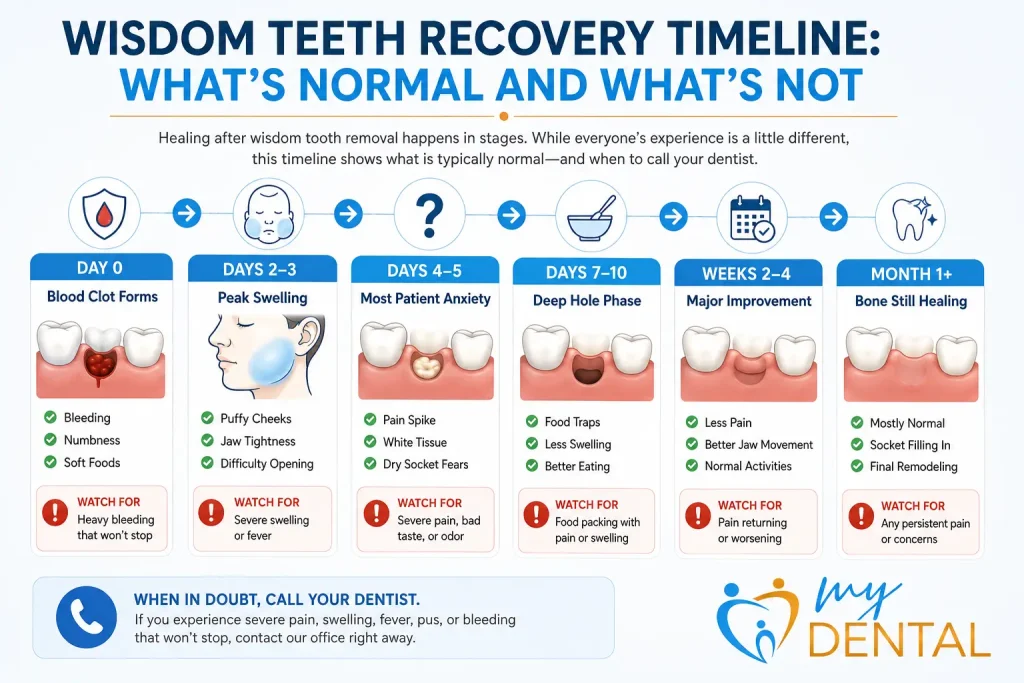
In this guide, I’ll walk you through a typical wisdom teeth recovery timeline and explain what I commonly see in my patients after surgery.
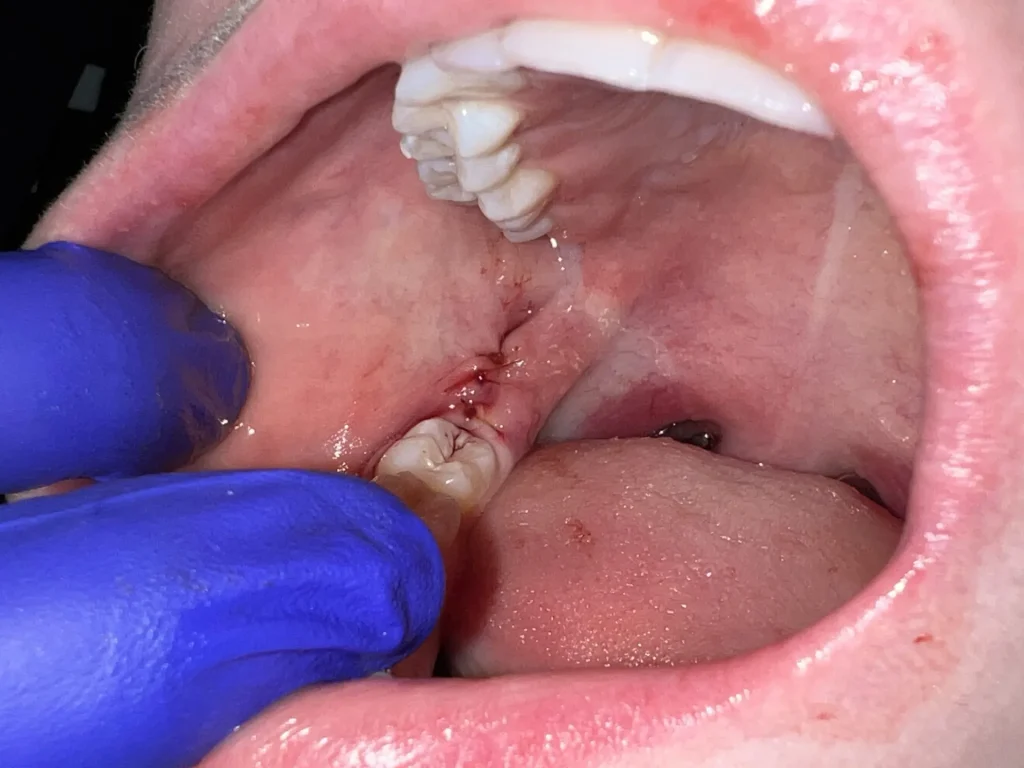
Immediately after wisdom tooth removal, your body begins forming a blood clot inside the extraction socket. This blood clot is one of the most important parts of the healing process because it protects the underlying bone and nerves while new tissue develops.
Numbness from local anesthesia
Oozing or minor bleeding
Mild discomfort
Fatigue from sedation
Difficulty speaking normally
Swelling beginning to develop
Many patients are surprised when they look in the mirror and see a deep hole where the tooth used to be. Others become concerned when they notice a dark area inside the socket. In most cases, what you’re seeing is the blood clot that is helping the area heal.

Detailed recovery instructions can be found in our Post-Operative Instructions for Tooth Extractions and Oral Surgery guide.
Bite firmly on gauze as instructed
Take medications before the anesthetic wears off
Rest as much as possible
Stay hydrated
Eat soft foods
Smoking or vaping
Drinking through a straw
Forceful rinsing
Aggressive spitting
Heavy physical activity
The first day is all about protecting the blood clot and allowing your body to begin healing.
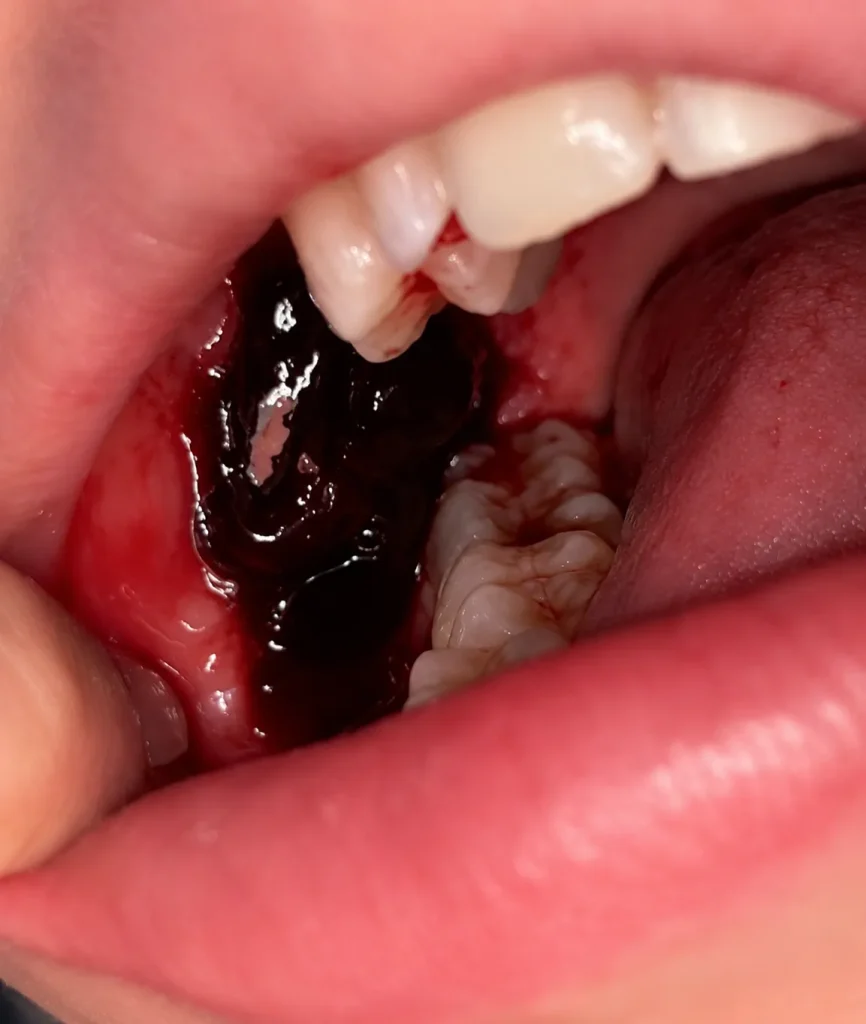
A liver clot is a large, jelly-like blood clot that can occasionally develop over an extraction site during the first 24–48 hours after wisdom tooth removal. Despite its alarming appearance, it is usually not a dry socket and is often a sign that your body is forming the blood clot needed for healing. In some cases, however, the clot becomes oversized and protrudes from the socket, making it more likely to be disturbed and continue bleeding.
Do not pull, rinse away, or attempt to remove a liver clot yourself. Doing so may restart bleeding and interfere with normal healing. Instead, gently bite on clean gauze for 30–60 minutes if active bleeding continues, avoid forceful rinsing, spitting, smoking, vaping, or drinking through a straw, and keep your head elevated.
If the liver clot continues to enlarge, repeatedly bleeds, interferes with your bite, or causes persistent bleeding that does not stop with pressure, contact your dentist or oral surgeon. In some cases, the clot may need to be professionally removed so a new, healthy blood clot can form and healing can continue normally.
The first full day after surgery is often easier than patients expect. Swelling has usually started but has not yet reached its peak.
Mild to moderate soreness
Jaw stiffness
Minor bleeding
Fatigue
Tender cheeks
Most patients can comfortably manage these symptoms with prescribed medications and a soft-food diet.
Some of my favorite recommendations for the first few days include:
Yogurt
Mashed potatoes
Smoothies without a straw
Soup
Applesauce
Protein shakes
The goal is to maintain good nutrition while avoiding foods that could irritate the surgical sites.
This is the stage that catches many patients off guard.
One of the most common things I hear is, “I felt better yesterday than I do today.”
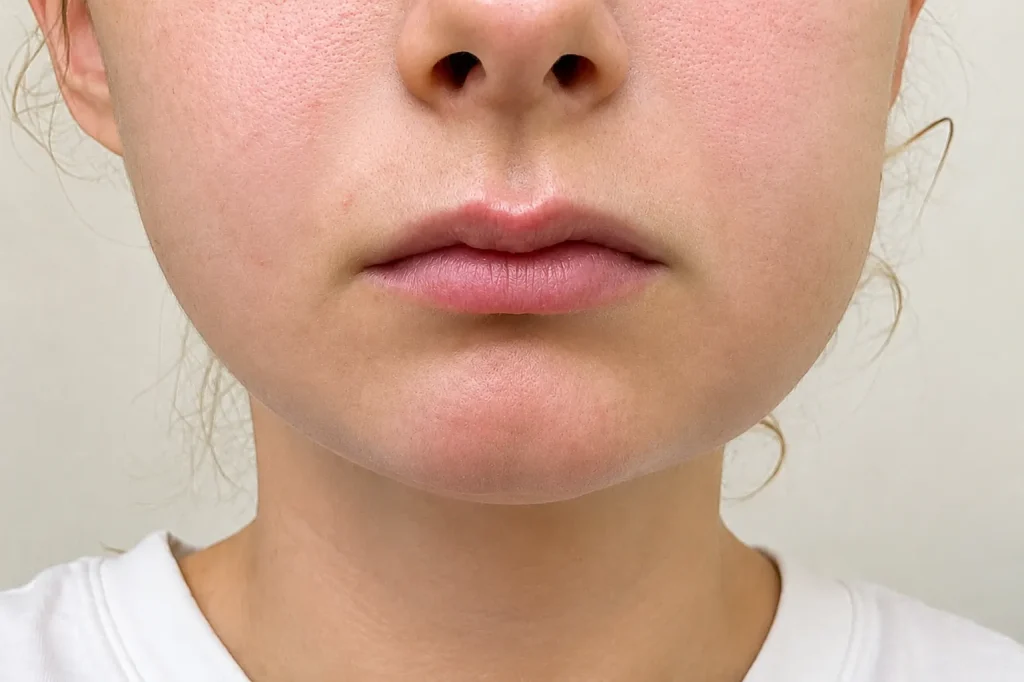
That’s because swelling typically peaks between the second and third day after surgery.
Increased swelling
Bruising
Jaw tightness
Difficulty opening the mouth
Increased discomfort
I’ve had many patients tell me they looked and felt worse on day three than they did immediately after surgery. While it can be frustrating, this is usually a normal part of recovery.
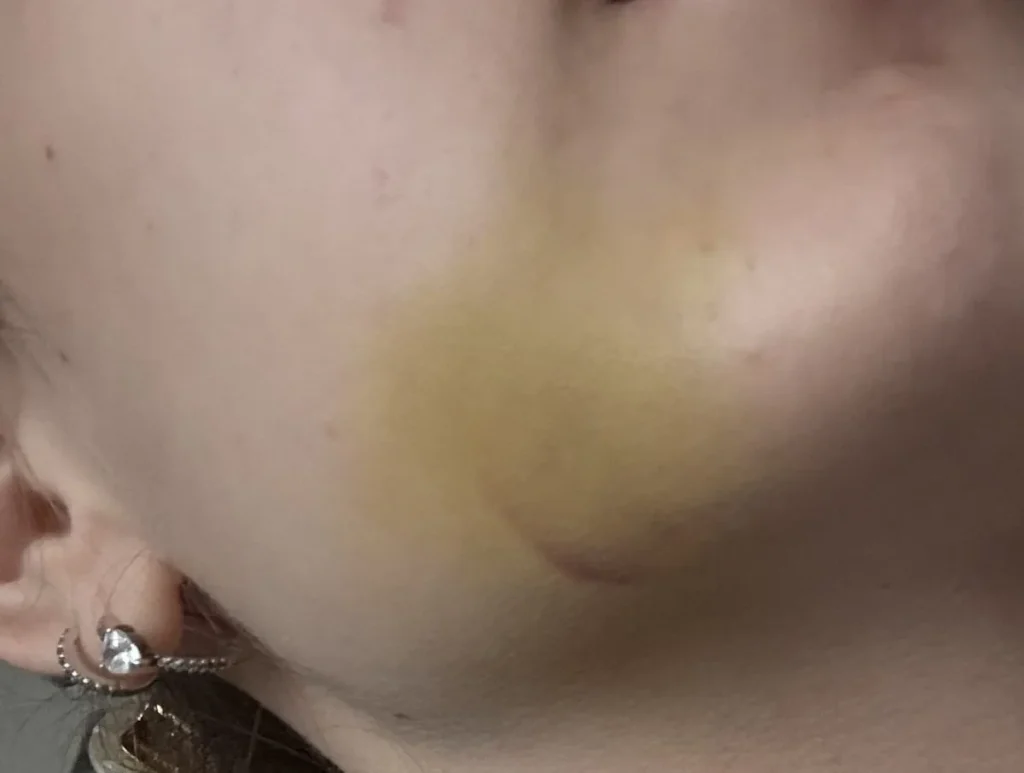
Swelling is a normal part of healing and usually reaches its maximum 48–72 hours after wisdom tooth extraction before gradually improving. While some swelling is expected, following your postoperative instructions can help reduce its severity. Apply an ice pack to the outside of your face for 20 minutes on and 20 minutes off during the first 24 hours, keep your head elevated while resting, stay well hydrated, eat a soft diet, and avoid strenuous physical activity for several days.
At MyDental, we provide a comprehensive postoperative prescription package designed to improve your recovery. Depending on your medical history and clinical needs, this may include anti-inflammatory agents, steroids to reduce swelling and jaw stiffness (trismus), prescription pain medication, antibiotics when indicated, and detailed postoperative instructions to help minimize complications and keep you comfortable during healing.
If swelling continues to worsen after the third or fourth day, or is accompanied by fever, pus, increasing pain, or difficulty swallowing, contact your dentist promptly for evaluation.
Many patients develop temporary jaw stiffness known as trismus.
This occurs because the muscles surrounding the surgical area become inflamed. In some cases, patients can only open their mouths one or two fingers wide.
In my practice, we often prescribe steroids to help reduce swelling and minimize trismus, especially when wisdom teeth are deeply impacted. Even with medication, some jaw tightness is still expected during this stage.
The good news is that trismus almost always improves as the inflammation resolves.
If I had to choose one point in recovery that generates the most phone calls, it would probably be day five.
Many patients expect to be feeling significantly better by now. Instead, they may notice:
Continued soreness
Tightness
Difficulty chewing
Mild swelling
Strange sensations in nearby teeth
This often leads patients to worry that something has gone wrong.
One reason day five can feel challenging is that many patients begin reducing or stopping their pain medications.
While taking medication, inflammation and discomfort are being controlled. Once those medications are reduced, symptoms can suddenly become more noticeable.
That does not necessarily mean there is a problem.
Dry socket is one of the biggest concerns patients have after wisdom tooth removal.
It most commonly develops between days two and five.
Typical symptoms include:
Severe pain
Pain radiating toward the ear
Bad taste
Foul odor
Visible exposed bone
One important point I always emphasize is that mild soreness alone is usually not dry socket. Dry socket pain is typically intense and difficult to ignore.
If you’re unsure, it’s always best to contact your surgeon for an evaluation.
For more details visit our Dry Socket Prevention & Treatment Guide blog.
One of the most common reasons patients panic during recovery is because they notice white or yellow material inside the extraction site.
In most cases, this is completely normal.
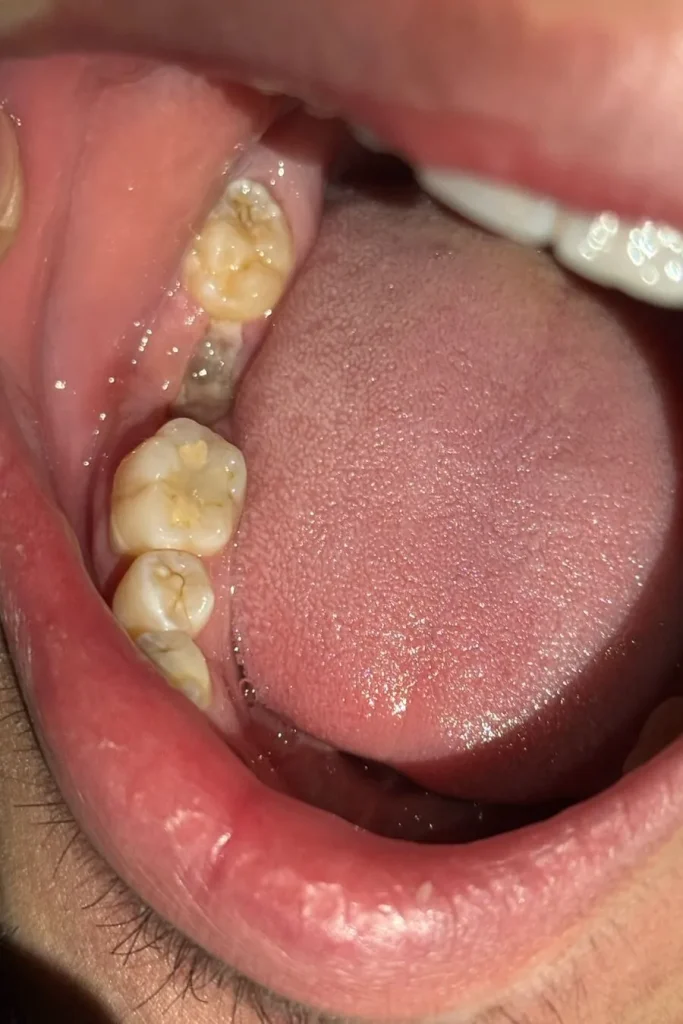
The white or yellow material is often fibrin, which is part of the body’s natural healing process.
Other normal findings include:
White tissue
Yellow tissue
Deep holes
Food collecting in the socket
Dissolving stitches

While many changes are normal, certain symptoms deserve attention:
Pus
Significant swelling
Fever
Severe worsening pain
When patients send me photos of healing extraction sites, the majority of the time what they’re seeing is healthy healing tissue rather than infection.
If you’re uncertain, schedule a follow-up appointment so your surgeon can evaluate the area.
By the end of the first week, many patients tell me that the hardest part of recovery is no longer the discomfort.
It’s the diet.
After several days of eating:
Yogurt
Mashed potatoes
Soup
Protein shakes
Most people are ready for pizza, chips, burgers, or other favorite foods.
Returning to crunchy or hard foods too early can:
Irritate healing tissue
Cause bleeding
Increase discomfort
Delay healing
I always remind patients that a little patience now can prevent unnecessary setbacks later.
Continue following your surgeon’s dietary recommendations until the extraction sites have progressed further in healing.
Around this point, patients usually notice several improvements:
Less swelling
Improved comfort
Increased jaw movement
However, a new concern often appears.
Patients look inside their mouths and notice that the extraction site still resembles a hole.
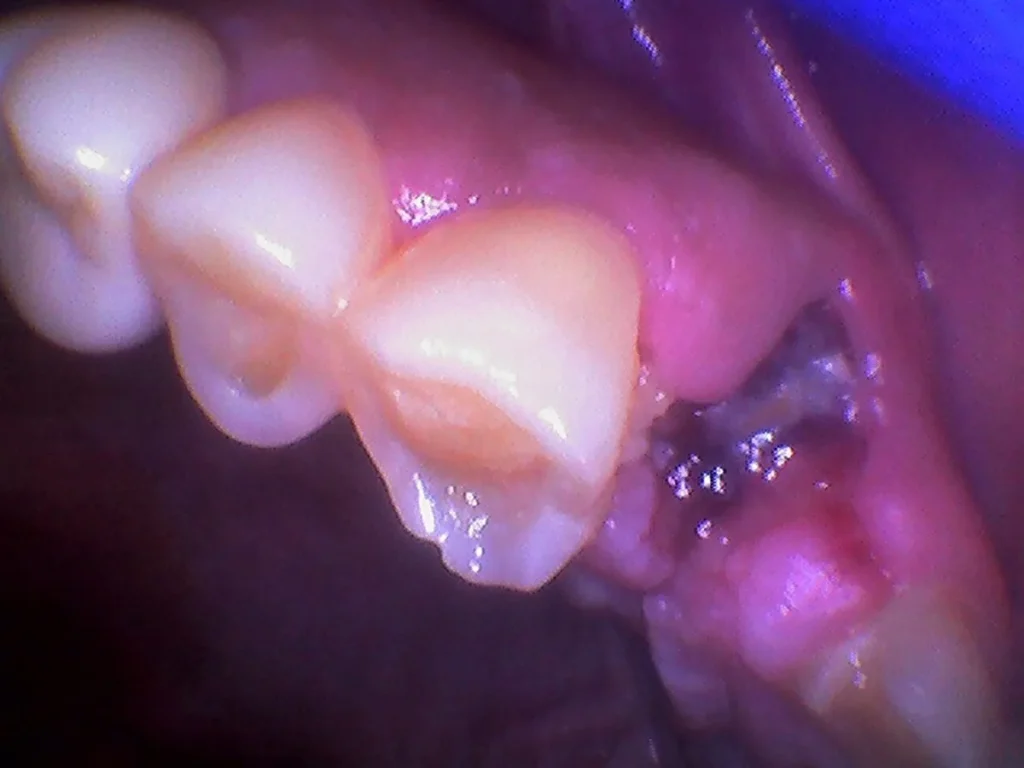
This is completely normal.
The gums heal faster than the bone underneath.
While the surface tissue may appear significantly improved, the bone inside the socket requires much more time to regenerate.
Some extraction sites remain visible for several weeks. Larger lower wisdom tooth sockets may take several months before the bone fully fills in.
Food trapping becomes increasingly common during the second week.
Patients frequently tell me they find:
Rice
Bread
Pasta
Chicken
inside the extraction site after meals.
This can be alarming, but it is often a normal part of healing.
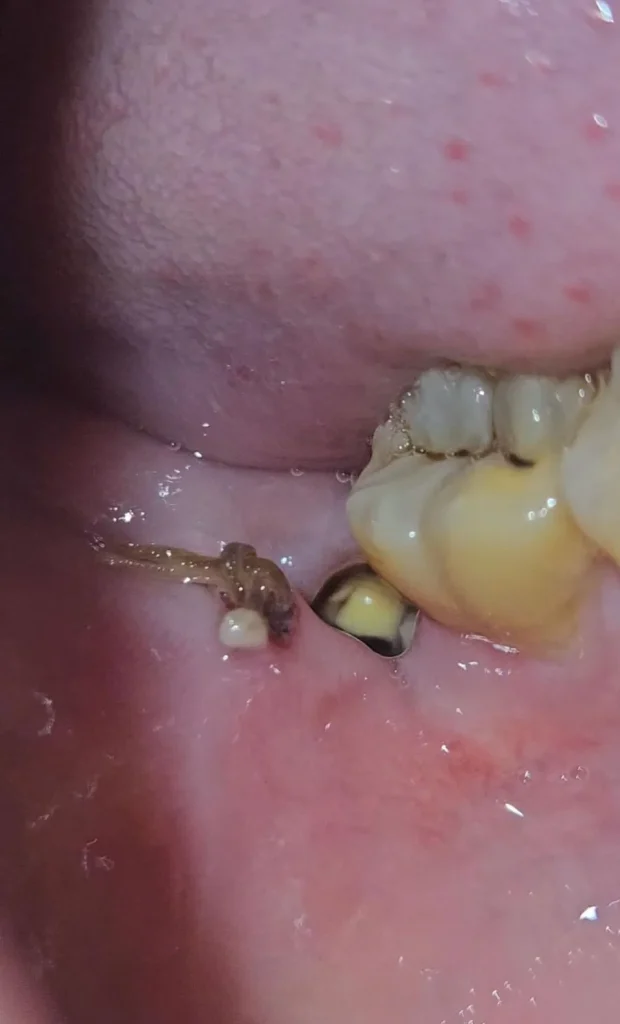
Many oral surgeons provide irrigation syringes that can be used after the first week to gently flush food debris from the socket.
Avoid using toothpicks, tweezers, or other sharp objects, as these can damage healing tissue.
For most patients, this is when recovery starts feeling much easier.
Minimal swelling
Improved jaw opening
More normal eating habits
Better sleep
Increased energy
Many patients return to their regular routines and begin thinking less about the surgery altogether.
At this stage, healing is still occurring beneath the surface, but day-to-day discomfort is usually greatly reduced.
By one month after surgery, most patients feel substantially recovered.
Typical milestones include:
Significant gum healing
Little to no discomfort
Return to a normal diet
Some patients still notice a slight depression where the tooth was removed. This is usually because the bone underneath continues remodeling long after the gums have healed.
Occasionally, patients notice a small sharp structure emerging through the gums several weeks after surgery.
This is often a tiny bone fragment called a sequestrum.
Although it can feel alarming, these fragments are usually harmless and may work their way out naturally as healing progresses.
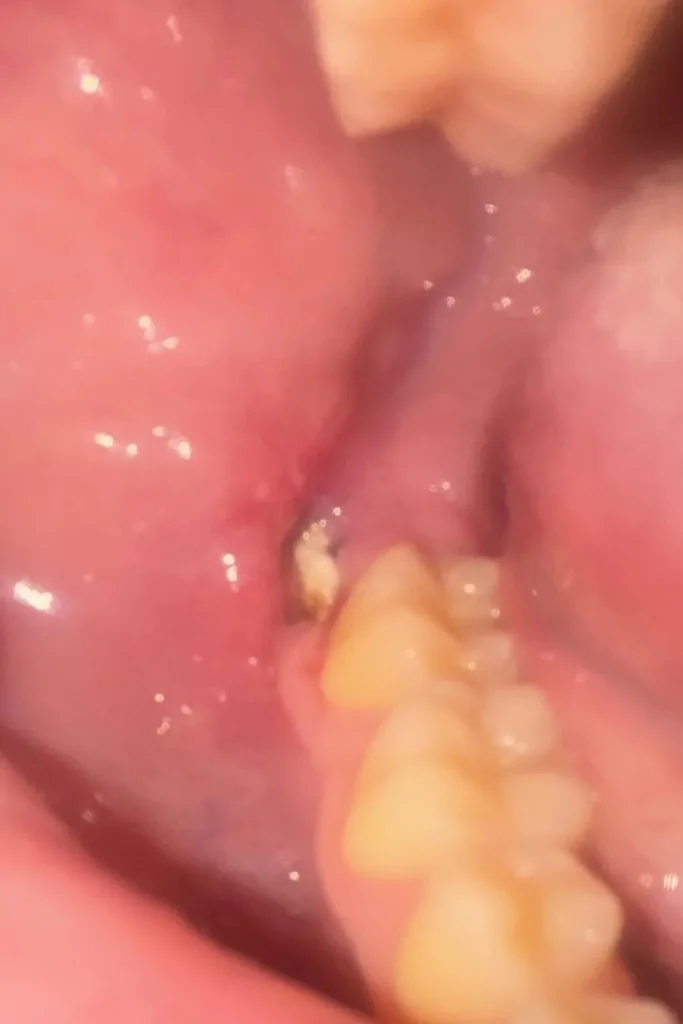
If the area becomes painful or irritating, your dentist can typically remove the fragment during a quick office visit.
Most wisdom tooth recoveries are routine, but there are situations where you should contact your dentist or oral surgeon promptly.
Seek professional evaluation if you experience:
Severe worsening pain
Fever
Increasing swelling
Difficulty swallowing
Difficulty breathing
Persistent heavy bleeding
Pus drainage
A foul taste that continues to worsen
When in doubt, I always encourage patients to call. It is far better to ask a question than to ignore a symptom that may require treatment.
One of the most important things I tell patients is that wisdom tooth recovery is rarely a straight line.
Many people experience:
Peak swelling on days two and three
Frustration around days four and five
Anxiety about white healing tissue
Concerns about deep extraction holes
Hunger from a prolonged soft-food diet
Fortunately, these experiences are usually part of normal healing.
Following your surgeon’s instructions, staying hydrated, maintaining good oral hygiene, and attending follow-up appointments are the best ways to support a smooth recovery.
If you have questions about wisdom tooth removal, dry socket, swelling, healing, or oral surgery recovery, schedule an evaluation with an experienced dental professional who can assess your specific situation and provide personalized guidance.