
mydentalflorida@gmail.com
Mon-Fri 8AM-6PM
Weekends by Appointment
mydentalflorida@gmail.com
Weekends by Appointment
Tooth extractions and oral surgery are performed to remove damaged, infected, or impacted teeth that cannot be saved. Wisdom teeth removal is one of the most common procedures, especially when teeth are impacted or causing pain, swelling, or crowding. At MyDental in Lutz, FL, extractions are carefully planned to minimize discomfort and support proper healing. Patients receive detailed post-operative instructions and follow-up care to ensure a smooth recovery and long-term oral health.
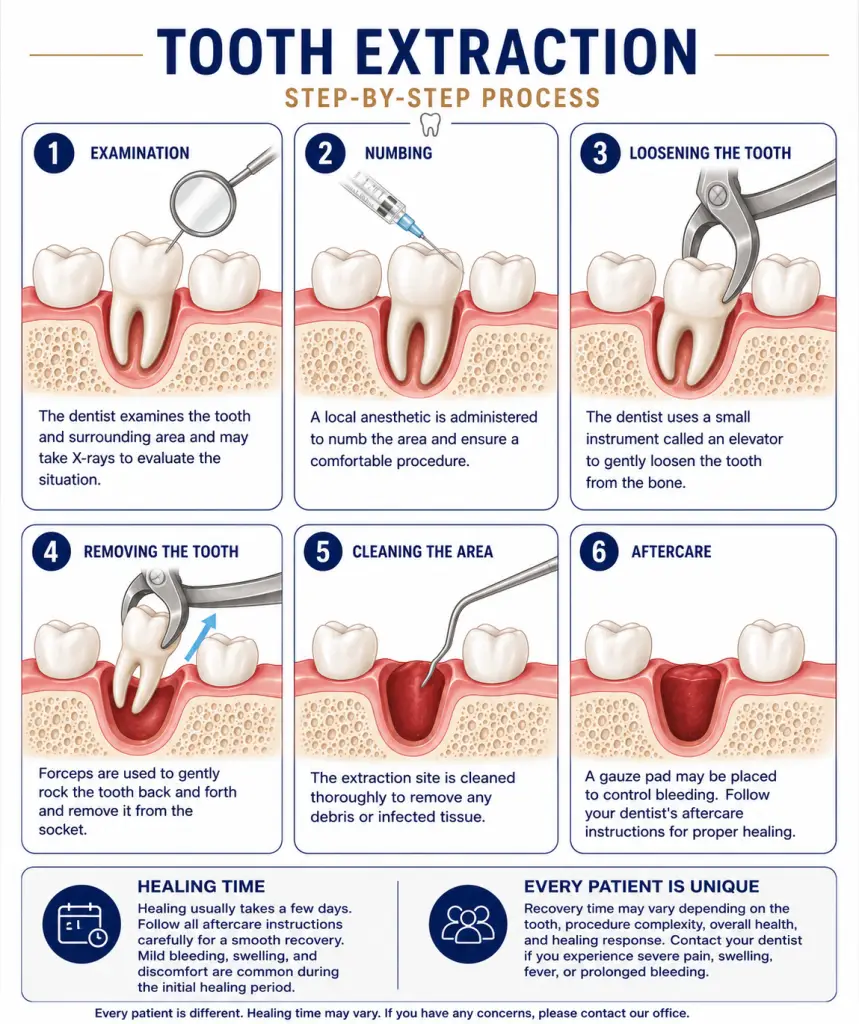
Do you have a tooth that is badly damaged or decayed and needs to be removed?
Owner of MyDental
You will know what the procedure involves, what recovery looks like, and what to do if something does not feel right afterwards.
Being nervous beforehand is normal and it is not something to push through alone. Knowing what is about to happen takes most of the fear out of it.
Oral surgery includes procedures involving teeth, gums, and jawbone, such as:
Our patients across Tampa and Lutz, FL are given detailed MyDental Post Operative Instructions for tooth extractions and oral surgery
Oral surgery, tooth extraction, and post-operative photographs are actual clinical cases treated by Dr. Marina Shurova at MyDental. The images document real procedures involving tooth extractions, wisdom teeth removal, bone grafting, surgical treatment, healing progress, and post-operative outcomes. No AI-generated images, stock photography, or digital procedure simulations were used. Images may be cropped, resized, or adjusted for lighting and patient privacy purposes only, while the clinical findings and surgical results themselves are authentic. These photographs are intended for educational purposes to help patients better understand oral surgery procedures, healing, and expected post-operative appearances.
Please note that every patient’s oral health condition, anatomy, healing response, surgical complexity, and recovery timeline are unique. Individual healing and treatment outcomes may vary, and no surgical procedure can guarantee identical results. Some clinical images may contain surgical or post-operative content that certain viewers may find sensitive.
A tooth extraction is the removal of a tooth from the bone and surrounding tissues. Extractions may be simple (visible tooth) or surgical (impacted, broken, or under the gum/bone).
Extraction is recommended when a tooth is:
Common signs include:
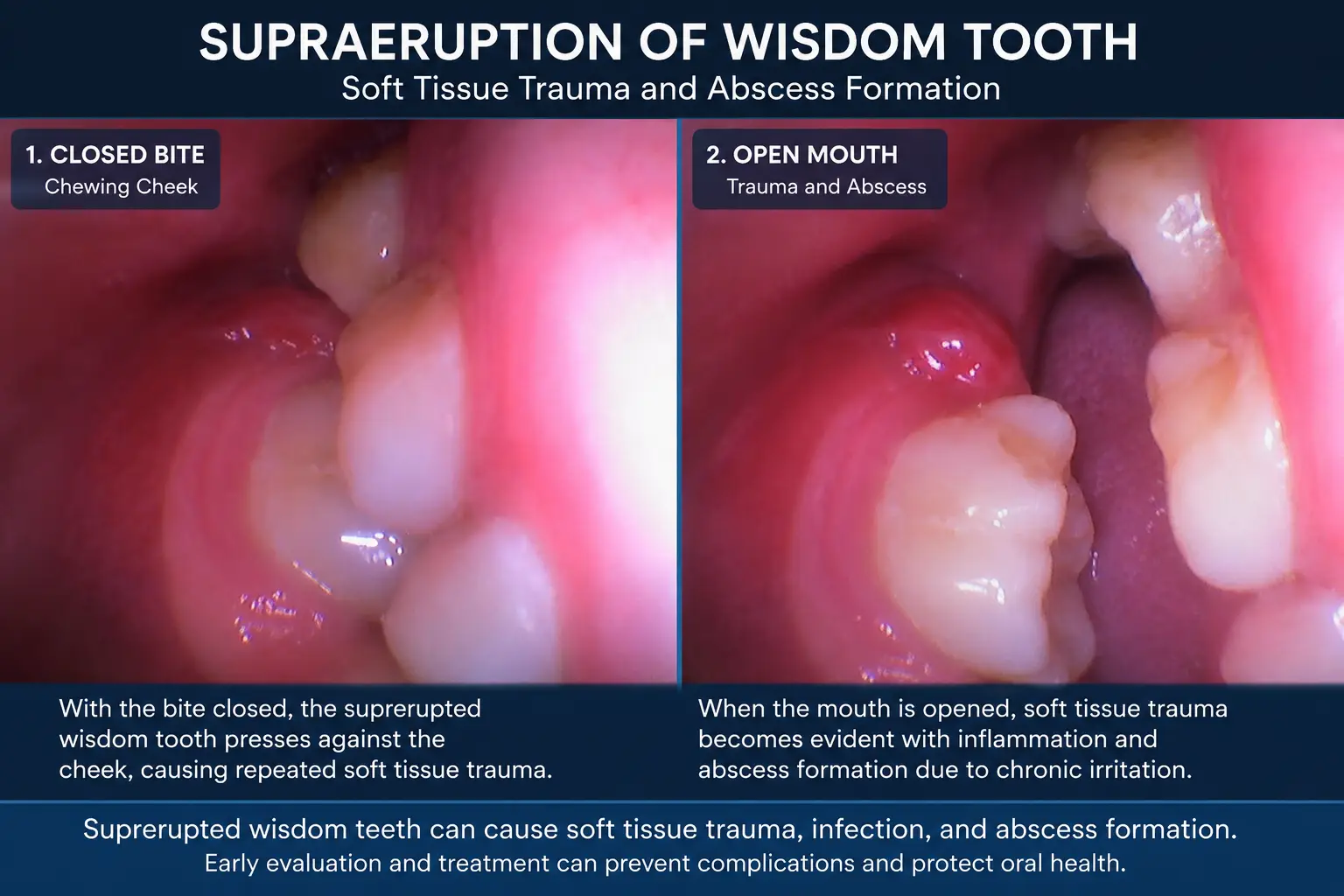
After a tooth is extracted, it is important to consider replacement options such as dental implants, bridges, or partial dentures. Leaving a space can lead to shifting (drifting) of neighboring teeth and supraeruption (the opposing tooth growing into the empty space), which can affect your bite, chewing function, and long-term oral health. Learn more about your options on our Tooth Replacement page.
Bone grafting is recommended to preserve the jawbone after a tooth is removed. Without a tooth, the surrounding bone can shrink over time, which may affect nearby teeth and facial structure. Preserving bone is especially important if you are considering a future Dental Implant.
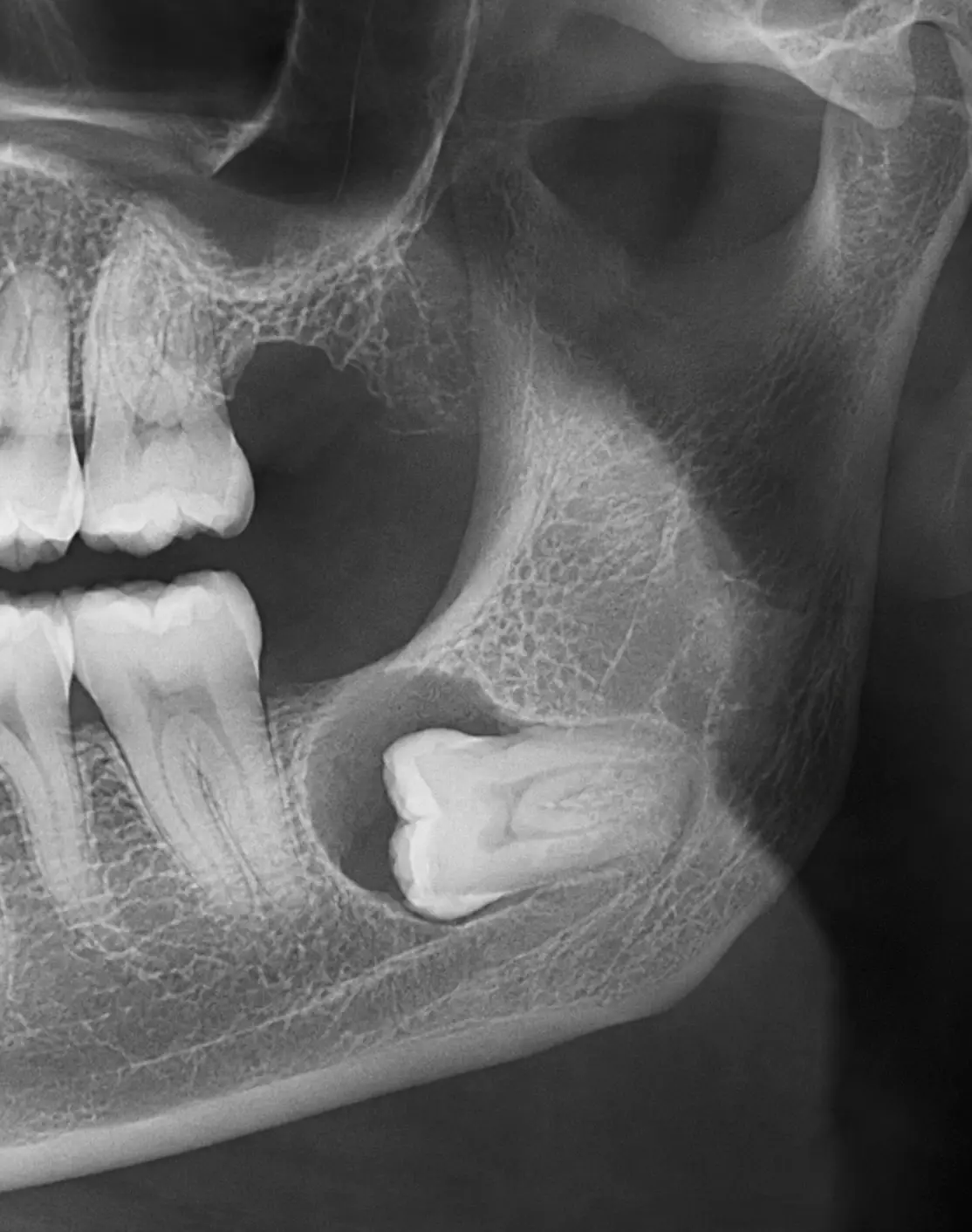
Impacted wisdom teeth are third molars that do not fully erupt due to lack of space or improper angle. They may be:
No. Wisdom teeth can remain if they are:
However, recurrent pain, infection, or impaction are strong reasons for removal.
For a deeper explanation check our blog Why Do Dentists Remove Wisdom Teeth? (And When You May Not Need Surgery).
In our latest You Ask, We Answer episode When Should Wisdom Teeth Be Removed? Dentist Dr. Marina Shurova explains these reasons from a dentist’s perspective and showing real cases.
In many cases, wisdom teeth are recommended to be removed in upper and lower pairs on the same side. This helps prevent issues such as cheek biting or trauma, which can occur when one tooth is removed and the opposing tooth continues to contact the soft tissue during chewing (see photo above).
Yes. If decay develops under a dental bridge and damages the supporting teeth, the bridge may become non-restorable, requiring:
Watch our YouTube video Severely Decayed Dental Bridge Removal demonstrated by Dr. Shurova. In this case, the dental bridge and the supporting teeth (abutment teeth) developed advanced decay and structural damage, making the restoration non-restorable. When decay progresses under a bridge, it may compromise the supporting teeth and require removal of the bridge and extraction of the affected teeth.
The procedure itself is typically not painful due to local anesthesia. Patients may feel pressure, but not sharp pain. Post-operative discomfort is expected and managed with medication.
Depending on the procedure:
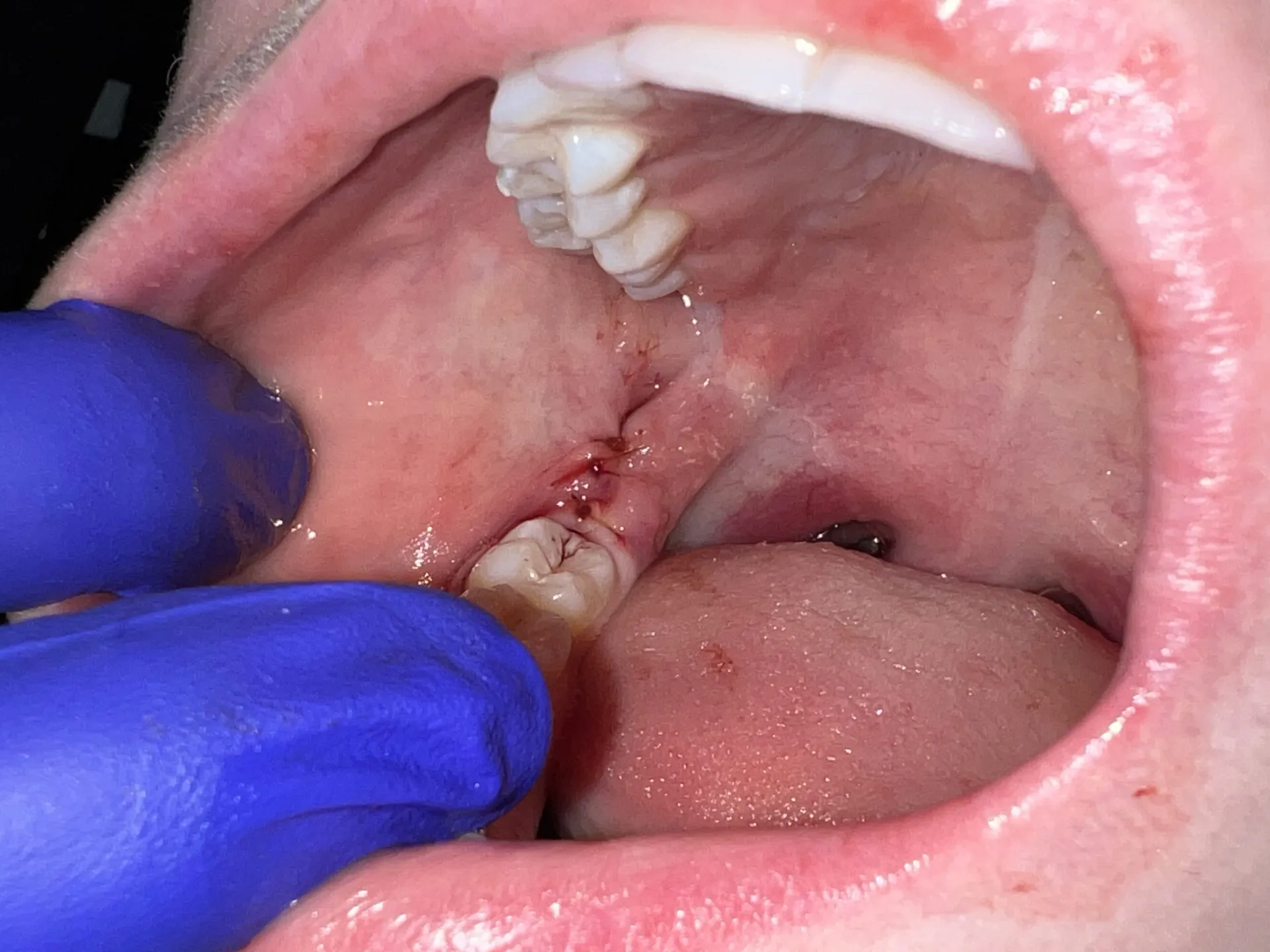
Stitches are placed to close extraction site and promote healing.
Typical recovery includes:
Complete healing of the bone takes longer.
Tooth extractions are among the most common dental procedures, and while they may feel intimidating, proper preparation and aftercare significantly improve comfort and healing outcomes. This video Healing Tips after Tooth Extraction explains what to expect before and after a tooth extraction and provides practical healing tips to reduce discomfort and minimize complications.
Dry socket occurs when the blood clot is lost or does not form properly.
Symptoms:
Check our blog Recently Had A Tooth Removed? We Will Tell You How To Prevent Dry Socket!
If you’re interested, we have Instagram short video about dry sockets and how to avoid them.
Yes. Swelling is expected and usually:
Uneven swelling between sides is common.
Each tooth can have a different level of surgical difficulty. The side that required more bone removal or manipulation will often:

Mild bleeding or blood-tinged saliva is normal for the first 24-48 hours. Small amounts of residual blood can appear in the mouth for several days.
Extraction site about 5 hours after removal of wisdom tooth
Recommended:
Avoid:
Most patients can return to routine activities within:
Antibiotics are prescribed when indicated, such as:
Early evaluation helps:
For more info please check out our video The Best Time to Remove Wisdom Teeth.
Around ages 12-17 is ideal for the following reasons:
1. Roots are not fully developed, no curved root tips
2. Usually clear of nerve canals
3. Easier recovery for younger patients with more robust immune systems and no medical conditions
Lower wisdom teeth can be close to the inferior alveolar nerve. In some cases:
Advanced imaging may be used when needed.
Untreated dental issues can lead to:
This real patient case at MyDental video Removing Dental Bridge along with Periodontally Compromised Teeth demonstrates how advanced periodontal disease can lead to sudden tooth loss, even when a dental bridge itself is still structurally intact. In this case, the bridge and supporting teeth came out together in one piece because the underlying teeth had become severely compromised from bone loss and gum disease. Many patients delay treatment because symptoms may progress slowly, but procrastinating dental care is one of the most common reasons routine problems turn into dental emergencies. Early diagnosis and periodontal treatment are critical to preserving teeth, protecting bone support, and avoiding more extensive restorative procedures such as extractions, bone grafting, dentures, or dental implants.
Preventive care includes:
Yes. At MyDental, we schedule post-operative follow-up appointments to:
Contact us immediately if you experience:
Watch a step-by-step educational video Impacted Wisdom Tooth Removal Surgery at MyDental.
This video demonstrates the surgical procedure used to remove a wisdom tooth trapped beneath the gums or bone. Impacted wisdom teeth can cause pain, swelling, infection, cyst formation, damage to neighboring teeth, crowding, and gum problems if left untreated. The video provides an educational close-up look at the surgical extraction process, including access to the tooth, sectioning when necessary, careful removal, and cleaning of the surgical site.
⚠️ Viewer discretion advised: This video contains real dental procedure footage that may include blood and surgical content, which some viewers may find sensitive. The goal of these videos is to help patients understand what happens during wisdom tooth removal and reduce anxiety through education.
Please, provide your details in the form to the right to proceed with booking. Let us know what your appointment needs are such as date, time, and other details.